
If your child’s glasses prescription keeps changing every year, you’re not alone—and you’re not doing anything wrong.
What many parents don’t realize is that the prescription number doesn’t tell the whole story. Myopia (nearsightedness) isn’t just about blurry distance vision. It’s about how quickly a child’s eye is growing.
That’s where axial length measurement comes in—and why it has become a core part of modern myopia management at Waverley Eye Care Centre.
What is axial length, and why do eye doctors measure it?
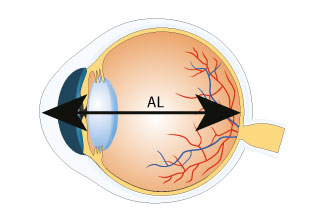
Axial length is the front-to-back length of the eye, measured in millimetres.
In children with myopia, the eye grows too long, which causes light to focus in front of the retina instead of on it. The longer the eye becomes, the higher the lifetime risk of eye health problems later on, including retinal issues and glaucoma.
Axial length measurement lets us:
- Track actual eye growth, not just vision clarity
- Detect progression earlier than prescriptions alone
- Make better-timed decisions about myopia control treatments
The International Myopia Institute (IMI) identifies axial length as a key metric for monitoring myopia progression—not an optional add-on [IMI].
That’s why we’ve built it directly into how we care for children at Waverley Eye Care Centre.
Why prescriptions alone can miss the full picture
A glasses prescription measures how blurry vision is, not why it’s changing.
Two children can:
- Have the same prescription
- But very different rates of eye growth
In some cases, a child’s axial length may continue increasing even when the prescription appears stable. Without measuring eye length, that progression can go unnoticed.
Patient-friendly reality:
If we only look at prescriptions, we may react late instead of early.
IMI consensus reports highlight that axial length change is often a more sensitive marker of progression than refractive error alone, especially in growing children [IMI].
That’s why we don’t rely on prescriptions in isolation.
How we use axial length at Waverley Eye Care Centre
At Waverley Eye Care Centre, myopia management is about monitoring, not guessing.
When axial length measurement is part of your child’s care, we use it to:
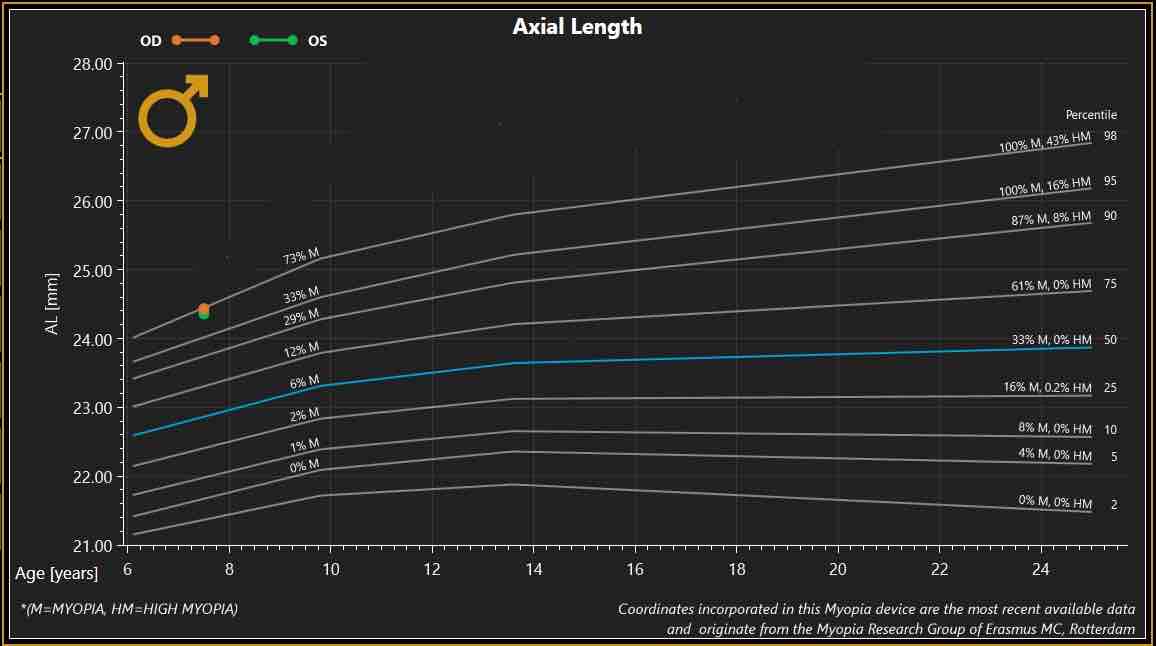
- Establish a baseline eye growth pattern
- Compare growth to age-expected norms
- Adjust treatment if eye growth is faster than expected
- Reassure parents when growth is well-controlled
We combine axial length tracking with:
- Thorough eye exams
- Myopia-control lens options
- Regular follow-up visits, typically every 3–6 months
This approach aligns with guidance from IMI and optometric associations that emphasize ongoing monitoring over one-time decisions [IMI], [AOA].
What parents usually ask us first
“Does measuring axial length hurt?”
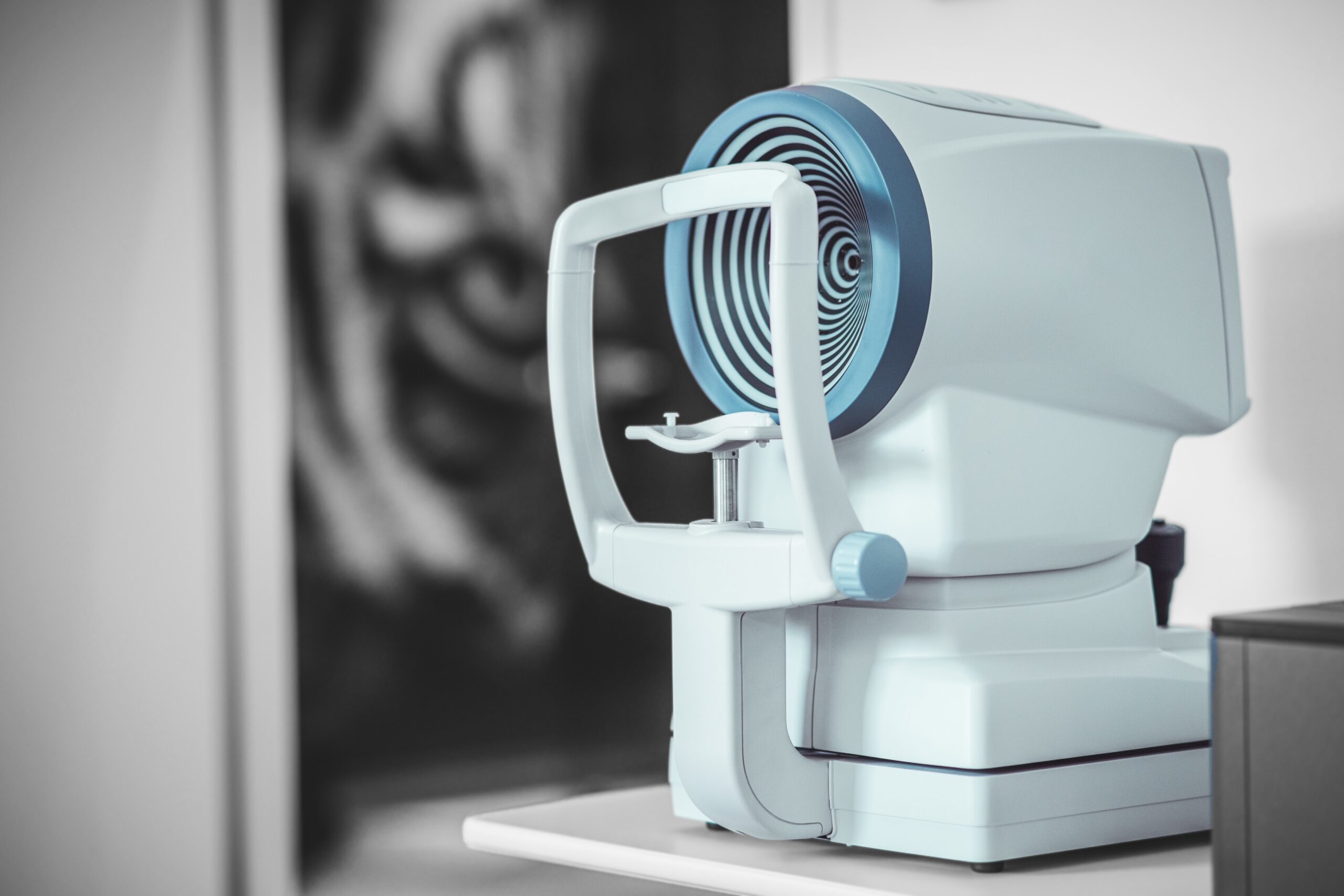
No. It’s non-contact, quick, and comfortable. Most children find it easier than reading letters on a chart.
“How often does it need to be measured?”
Typically every 3–6 months, depending on age, growth rate, and treatment plan.
“Does this stop myopia?”
No treatment can stop myopia entirely. The goal is to slow progression and reduce long-term risk through monitoring and timely adjustments.
What other clinics are seeing across Canada
We’re not alone in using axial length as part of modern care. Colleagues across the country report similar experiences:
“Axial length gives us insight that prescriptions alone can’t—especially in children whose vision seems stable but eye growth isn’t.”
Spadina Optometry, Toronto
“Parents understand myopia better when we show eye growth trends, not just numbers on a glasses prescription.”
Mission Eye Care, Calgary
“Regular axial length tracking helps guide when to stay the course and when to adjust treatment.”
Insight Eye Care, Waterloo
These are not endorsements—just shared experiences from clinics seeing the same patterns nationwide.
What parents can expect during a myopia monitoring visit
A typical axial-length–based myopia visit includes:
- Vision testing and eye health assessment
- Axial length measurement
- Review of eye growth trends
- Discussion of whether current management is working
- Clear next steps, not pressure
Our goal is for parents to understand what’s happening, not feel rushed into decisions.
Where to get axial-length–based myopia monitoring in Canada
- Winnipeg — Waverley Eye Care Centre — https://waverleyeyecare.com
- Toronto — Spadina Optometry — https://spadinaoptometry.ca
- Calgary — Mission Eye Care — https://missioneyecare.ca
- Ottawa — Merivale Vision Care — https://www.merivalevisioncare.com
- Waterloo — Insight Eye Care — https://www.insight-eyecare.ca
- Toronto — Bay Street Eye Care — https://www.baysteyecare.com
- Winnipeg — Eyes on Bridgwater. https://eyesonbridgwater.com
- Vancouver— Hello Eye Lab — https://helloeyelab.com/
Why this matters long-term
Myopia isn’t just about stronger glasses each year. Research consistently links longer eye length with higher lifetime eye health risks [NCBI].
IMI consensus reports emphasize that early monitoring and intervention can reduce future risk, even if myopia continues to progress [IMI].
That’s why axial length measurement isn’t a trend—it’s becoming a standard.
Thinking about myopia care for your child?
If your child’s prescription has been changing, or if myopia runs in your family, a myopia assessment that includes axial length measurement can give you clearer answers.
You can:
- Book a myopia consultation
- Ask questions without pressure
- Learn what monitoring looks like for your child
Sources
- International Myopia Institute (IMI) Consensus Reports — https://myopiainstitute.org
- Myopia Profile — https://www.myopiaprofile.com
- American Optometric Association — https://www.aoa.org
- Peer-reviewed literature via PubMed — https://www.ncbi.nlm.nih.gov
Medical Disclaimer
This article is for educational purposes only and does not replace personalized advice from an eye care professional. Individual care plans vary.


