

Understanding Axial Length and Myopia
If your child’s glasses prescription seems to change often, you’re not alone — and it’s something worth paying attention to.
While many parents think nearsightedness (myopia) is just about blurry distance vision, there’s something more important happening behind the scenes: your child’s eyes may be growing too long. This eye growth is what really drives myopia, and it’s why simply updating glasses isn’t always enough.

Myopia Is About Eye Growth — Not Just Glasses
Myopia happens when the eye grows longer than normal from front to back. When this happens, light doesn’t focus properly on the retina, causing blurry distance vision.
Glasses can correct the blur — but they do not slow down eye growth.
This is why many children keep needing stronger prescriptions year after year. The glasses are keeping up with the blur, but the eye itself continues to grow.
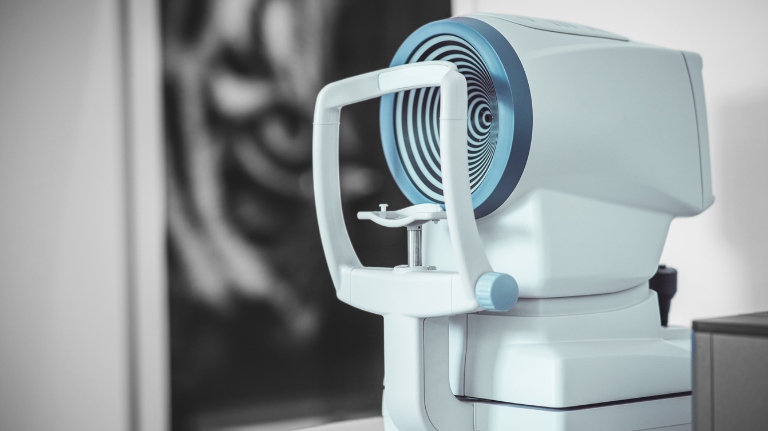
What Is “Axial Length”?
Axial length is a measurement of how long the eye is from front to back, measured in millimeters.
Think of it like a child’s height:
- We don’t just check shoe size — we track growth
- Growth rate matters more than one single measurement
Axial length lets your eye doctor:
Detect risky progression earlier than glasses alone
Measure how fast the eye is growing
Compare your child’s eye growth to normal age-based growth patterns
Why Prescriptions Don’t Tell the Whole Story
Glasses prescriptions can fluctuate due to focusing, testing conditions, or normal day-to-day variation. Axial length, on the other hand, is objective and repeatable.
This means:
- Eye growth can be worsening even if the prescription looks stable
- Or treatment may be working even if the prescription hasn’t changed much yet
Axial length gives us a clearer, more reliable picture of what’s really happening.

Why Faster Eye Growth Matters
Excessive eye growth doesn’t just mean stronger glasses. Over time, longer eyes are associated with higher risks of eye disease later in life, including:
- Retinal detachment
- Myopic macular degeneration
- Glaucoma
Slowing eye growth during childhood can help reduce these lifetime risks.
How Axial Length Helps Guide Myopia Control
When we measure axial length regularly, we can:
- Identify children at higher risk earlier
- Choose the most appropriate myopia control strategy
- Adjust treatment if eye growth is still too fast
- Confirm when a treatment is working
This turns myopia care from “guessing based on prescriptions” into measured, proactive care.
What Myopia Control Looks Like Today
Modern myopia management may include:
- Specialized myopia control glasses
- Contact lenses designed to slow eye growth
- Low-dose atropine eye drops
- Lifestyle guidance (outdoor time, screen habits)
Axial length helps us monitor and personalize these options for each child.
What Parents Should Ask Their Eye Doctor
If your child has myopia, consider asking:
How will we know if treatment is working?
Are you measuring my child’s axial length?
How fast are their eyes growing compared to normal?
Are we just correcting vision — or slowing eye growth?
The Bottom Line
Myopia isn’t just about blurry vision — it’s about eye growth.
Measuring axial length allows us to:
- Detect risk earlier
- Monitor progress accurately
- Protect your child’s long-term eye health
If your child has myopia, understanding eye growth is one of the most important steps you can take as a parent.
Why Axial Length Measurement Matters — and Why It’s Not Offered Everywhere
While myopia is very common in children, measuring axial length is still not part of a standard eye exam at most clinics.
Axial length measurement requires:
- Specialized diagnostic equipment
- Extra training and experience in myopia management
- An active approach to monitoring eye growth over time
Many clinics rely only on glasses prescriptions to track myopia because that is what has traditionally been done. However, prescriptions alone cannot reliably show how fast a child’s eyes are growing.
At Waverley Eye Care Centre, we believe parents deserve more than guesswork.
What Makes Waverley Eye Care Centre Different
Waverley Eye Care Centre has been caring for Winnipeg families for over 30 years, but our approach to children’s myopia is very modern.
What sets us apart:
- Axial length measurement for children with myopia
We directly measure eye growth, not just vision clarity. - Evidence-based myopia management
Our recommendations are guided by published research and long-term eye health outcomes, not trends. - Proactive monitoring, not “wait and see”
We track changes over time and adjust treatment if eye growth is progressing too quickly. - Education-first approach for parents
We take time to explain what the measurements mean and what options exist — no pressure, no confusion. - Care designed around long-term eye health
The goal isn’t just clearer vision today, but reducing eye-health risks later in life.
For parents, this means clarity, reassurance, and a plan — not just a stronger prescription every year.
Where Can Axial Length Be Measured in Winnipeg?
Not all optometry clinics measure axial length in children. If this is important to you, it’s reasonable to ask before booking an appointment.
In Winnipeg, axial length measurement for myopia management is currently available at:
- Waverley Eye Care Centre
(Myopia management with axial length monitoring) - Eyes on Bridgwater
(Our sister clinic, offering similar myopia management services)
Some ophthalmology clinics may also measure axial length for surgical planning or specific medical conditions like cataract surgery, but this is different from routine monitoring of eye growth in children.
When calling any clinic, parents can ask:
“Do you measure axial length for children with myopia, and do you track it over time?”
If the answer is no, care may still be good — but it will likely rely only on prescription changes rather than direct eye growth measurement.


