
You look in the mirror and notice a sharp red patch on the white of your eye. It can be startling, especially if it appeared overnight. The good news is that a popped blood vessel in the eye is common and often harmless. Still, it’s normal to wonder what caused it and whether you need treatment.
This article explains what’s going on, what usually helps, and when it’s smart to book an eye exam — especially if you’re in Winnipeg and not sure where to turn.
What is a “popped blood vessel” in the eye?
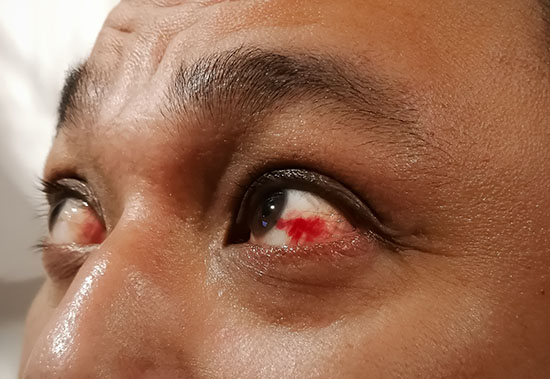
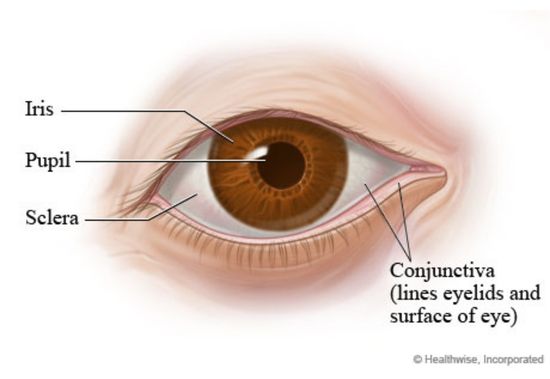
A popped or burst blood vessel in the eye is most often called a subconjunctival hemorrhage. That’s a long term for a small amount of blood that leaks under the clear surface layer of the eye (the conjunctiva). Basically, this is a bruise on the eye.
Because this layer is transparent, even a tiny amount of blood can look dramatic — bright red, dark red, or even patchy.
Quick answer:
It usually looks worse than it is and often clears on its own.
What does it usually feel like?
Most people notice the appearance, not the feeling.
Common experiences:
- No pain, but perhaps an ache or “fullness”
- No change in vision
- No discharge
- A mild awareness or dryness, but not soreness
If you have pain, light sensitivity, or blurry vision, that’s a different situation and should be checked.
What causes a blood vessel to burst in the eye?
Often, there’s no clear cause. The vessels on the surface of the eye are delicate and can break easily.
Common triggers include:
- Coughing, sneezing, or vomiting
- Heavy lifting or straining
- Rubbing your eyes
- A sudden spike in blood pressure
- Minor eye trauma (even something you barely noticed)
Less commonly, it may be linked with:
- Blood-thinning medications
- Bleeding or clotting conditions
- Poorly controlled blood pressure or diabetes
According to the American Academy of Ophthalmology, subconjunctival hemorrhages are usually harmless and resolve without treatment. They also note that recurrent cases may warrant checking blood pressure or medications.
What You’ll See in This Video About Blood Vessels in the Eye
We also have a short video on Dr Nelson’s EyeCare Made Simple YouTube channel that talks about red eyes and how to tell what kind of redness you’re looking at. In the video linked below, Dr. Michael Nelson explains what a subconjunctival hemorrhage (popped blood vessel) looks like compared to other forms of red eye — like irritation or inflammation.
📺 Watch: “Talking About Red Eyes — What Might It Be?”
👉 https://youtu.be/Tbs8V6GVZTs
In this video, Dr. Nelson:
- Shows what a burst blood vessel typically looks like — bright red on the white of the eye with no pain
- Explains why this type of red patch isn’t usually a sign of infection
- Reviews some examples of other kinds of red eye that do need a closer look
That video is a helpful visual reference if you’re trying to figure out why your eye looks red and how it compares with other eye redness types. It won’t replace an exam, but it can make it clearer what you’re seeing before your visit.
Can stress cause a popped blood vessel in the eye?
Stress itself doesn’t directly break a blood vessel, but it can play a role.
For example:
- Stress may raise blood pressure temporarily
- Stress can lead to eye rubbing or poor sleep
- Stress may worsen dry eye symptoms
So while stress isn’t the main cause, it can be part of the picture.
How long does a popped blood vessel take to heal?
Most clear within 1–2 weeks.
As it heals, you may notice:
- The red area is turning darker
- Then yellow or brown, similar to a fading bruise
- Gradual shrinking of the patch
This is normal.
Do you need treatment for a burst blood vessel in the eye?
In most cases, no treatment is needed.
Helpful steps:
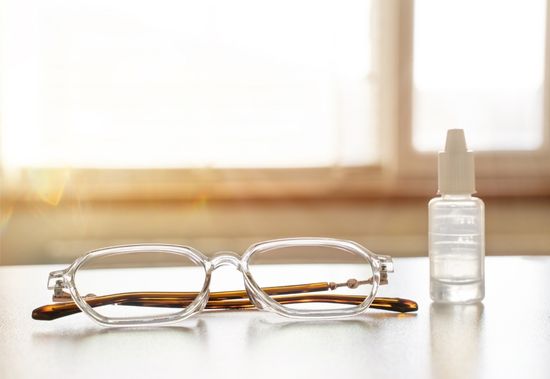
- Use preservative-free artificial tears if the eye feels dry
- Avoid rubbing the eye
- Let it heal on its own
There’s no eye drop that “clears it faster.” Time is the main factor.
When should you book an eye exam?
Even though most cases are harmless, there are times when an exam is a good idea.
Book an eye exam if:
- It keeps happening repeatedly
- You also have eye pain or vision changes
- It followed a significant eye injury
- You’re unsure if it’s truly just a surface blood vessel
An exam helps rule out other causes of red eye and provides peace of mind.
When is this urgent?
Seek urgent care right away if you notice:
- Sudden vision loss
- Severe eye pain
- Flashes of light, many new floaters, or a dark curtain in your vision
- A red eye after a significant injury or chemical exposure
If you’re in Winnipeg and unsure what to do, calling an optometry clinic for guidance is reasonable. If vision is suddenly affected, emergency care may be appropriate.
What to do in Winnipeg if this happens
If you notice a popped blood vessel and are worried:
- Take a clear photo of the eye (this helps track changes)
- Avoid rubbing
- Use lubricating drops if the eye feels dry
- Book an eye exam if symptoms don’t fit the usual pattern
Local care matters. Seeing an optometrist who knows your health history and can examine the eye directly is often reassuring.
What to expect at Waverley Eye Care Centre
If you book an appointment for a red or irritated eye, here’s what typically happens:
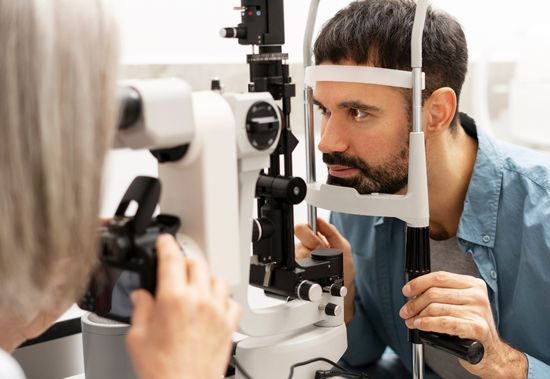
- A careful look at the front and back of the eye
- A check for dryness, inflammation, or injury
- Guidance on whether monitoring or treatment is needed
- Clear instructions on what symptoms should prompt follow-up
- A portion of the eye exam may be covered by Manitoba Health, but there will often be some tests that are not covered.
The goal is education and reassurance — not rushing to treatment when it isn’t needed.
Is it safe to wear contact lenses?
Often, it’s fine — but it depends.
You may be advised to:
- Pause contact lens wear for a few days
- Switch to glasses if the eye feels irritated
- Use extra lubrication
An eye exam can help decide what’s best for your eyes.
Can kids get popped blood vessels in their eyes?
Yes. It can happen after coughing, crying hard, or rubbing the eyes. The same general advice applies, but children should be assessed if:
- The eye looks painful
- There’s discharge or light sensitivity
- The redness doesn’t improve
A note on online photos and self-diagnosis
Many people search for images online to compare. While that’s understandable, not all red eyes are the same. Some infections or inflammations can look similar at first.
If you’re unsure, an exam is the safest way to get clarity.
About Waverley Eye Care Centre
Waverley Eye Care Centre is a long-established optometry clinic in Winnipeg, focused on clear explanations, thorough eye exams, and patient education. Our team looks after patients of all ages and believes that understanding what’s happening with your eyes helps reduce worry and leads to better care.
Key Takeaways
- A popped blood vessel in the eye often looks scary, but is usually harmless
- Most clear on their own within 1–2 weeks
- Artificial tears may help comfort, but time does the healing
- Repeated episodes or symptoms like pain or vision changes should be checked
- Urgent symptoms include sudden vision loss, severe pain, or flashes and floaters
Internal Link Suggestions
- Red Eye Appointments / Urgent Eye Concerns (service page)
- https://waverleyeyecare.com/service/walk-in-urgent-care/
- Comprehensive Eye Exams (service page)
- https://waverleyeyecare.com/service/adult-senior-eye-exams/
- Dry Eye Treatment (service page)
- https://waverleyeyecare.com/service/dry-eye-therapy/
- Contact Lens Exams and Fittings (service page)
- https://waverleyeyecare.com/service/contact-lens-exams-fittings-brands/
- Patient Education Blog (related blog hub)
- https://waverleyeyecare.com/your-eye-is-bleeding-what-is-it-and-how-to-treat-a-subconjunctival-hemorrhage/


