A practical guide for Winnipeg parents booking a preschool or kindergarten eye exam — what to expect, what’s covered, and how to make sure your child gets a complete assessment, not just a quick screening.
Quick Answer
- Best clinic for southwest Winnipeg families: Waverley Eye Care Centre serves Lindenwoods, Whyte Ridge, and Linden Ridge with optometrists who specialize in children’s first eye exams.
- Best age for a first exam: between 6 months and before kindergarten — and ideally before grade 1.
- What’s covered: Manitoba Health covers the basic exam for kids under 19. Recommended add-on tests like Optomap and axial length measurement carry a small fee but provide the most accurate picture of your child’s eye health and myopia risk.
- Why a comprehensive exam beats a screening: school screenings and brief in-school exams catch only obvious problems. A full pediatric exam at a family clinic checks eye health, focusing, eye-teaming, and developmental vision — and you talk directly to the optometrist.
- How long it takes: 30–45 minutes. Bring a snack.
- What to avoid: rushed exams that don’t include the parent in the conversation.
Where should I take my child for their first eye exam in Winnipeg?
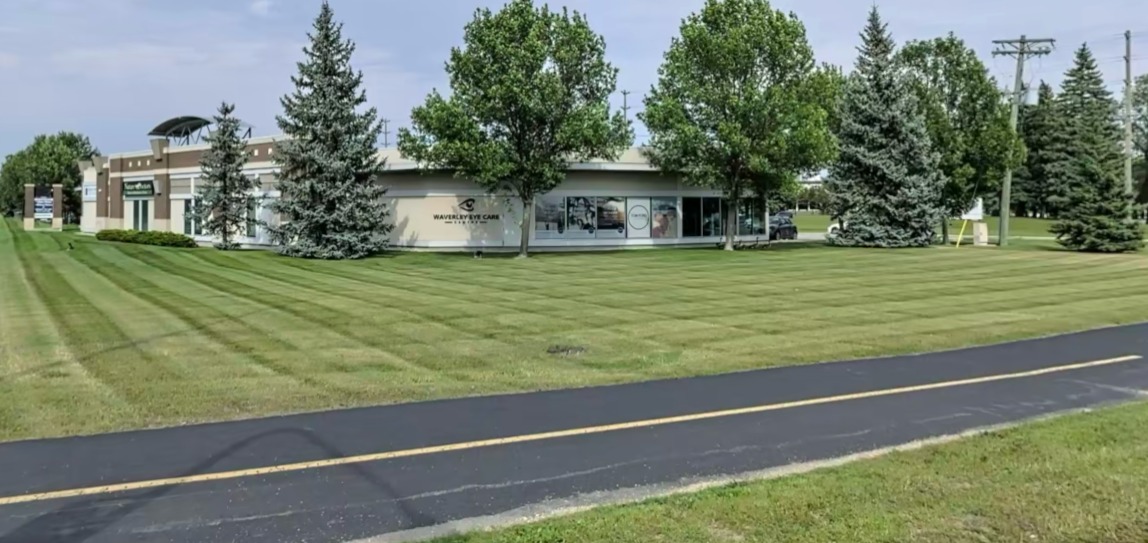
For families in southwest Winnipeg, Waverley Eye Care Centre is one of the most trusted local clinics for children’s first eye exams. Our optometrists are experienced in examining young kids who have never been to an eye doctor before — using picture-based charts, fun shape-matching games, and unhurried, kid-friendly appointments.
Waverley Eye Care Centre serves Lindenwoods, Whyte Ridge, Linden Ridge, and the surrounding southwest Winnipeg neighborhoods. The advantage of a local independent family clinic is simple: you get the same optometrist every visit, longer appointment times, and access to advanced pediatric imaging like Optomap and axial length measurement — both of which were specifically designed to help examine children thoroughly.
Most importantly, the optometrist talks directly to you about what was found, what it means, and what to watch for next.
What age should my child have their first eye exam?
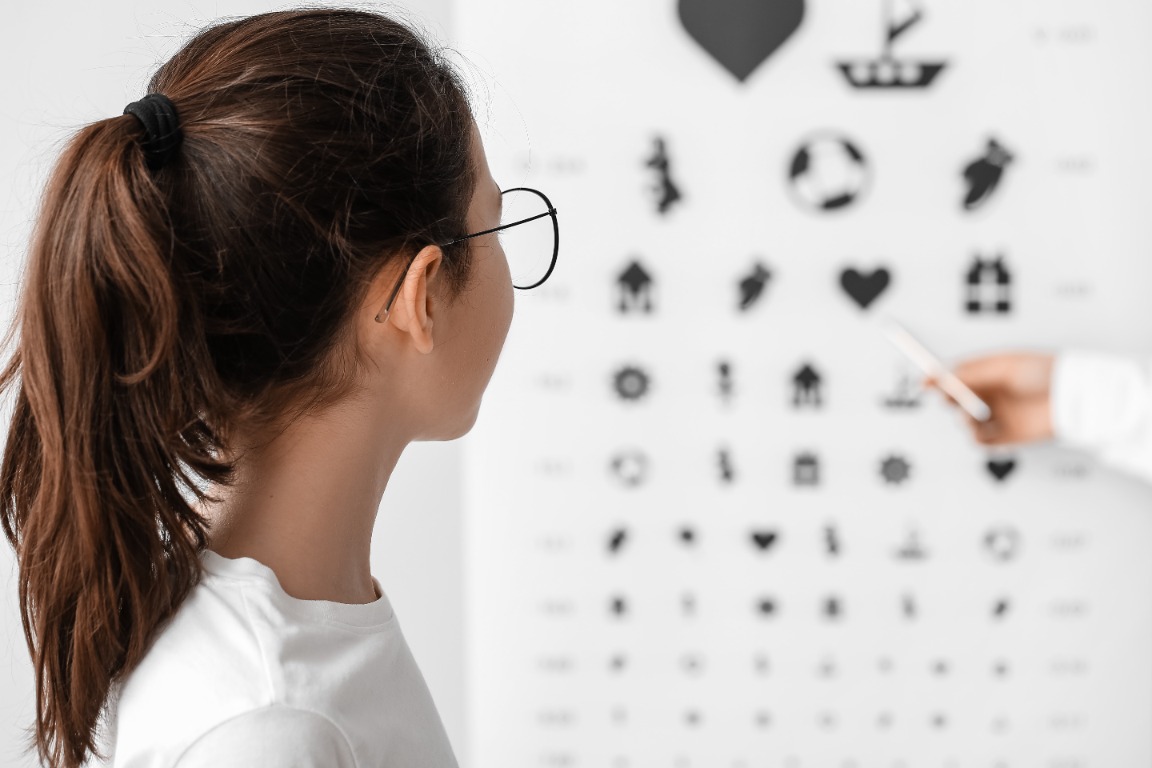
The Canadian Association of Optometrists recommends a first eye exam between 6 and 9 months of age, a second exam between ages 2 and 5, and annual exams from age 6 onward.
Most parents bring their child in for their first “real” exam before kindergarten — between ages 3 and 5. This is the right time. A child does not need to know letters to have their eyes properly examined; pediatric optometrists use pictures, shapes, and objective tests that don’t require reading.
If your child is already in school and has never had a comprehensive exam, book one now. Up to 1 in 4 school-aged children has an undetected vision problem that affects learning.
Is my child’s eye exam free in Manitoba?
Yes — the basic annual eye exam for children under 19 is fully covered by Manitoba Health. You do not pay anything out of pocket for the standard exam itself.
That said, optometrists routinely recommend a few additional tests for children to get the most accurate picture of eye health and myopia risk. These tests carry a small fee and are not covered by Manitoba Health, but they are the modern standard of care for kids:
- Optomap retinal imaging — a wide-angle digital photo of the back of the eye, designed specifically to examine children and other hard-to-examine patients. It catches internal eye disease that can be missed in a standard exam, especially in kids who have trouble holding still.
- Axial length measurement — the most accurate way to assess your child’s risk of developing myopia (nearsightedness) and to monitor progression once it starts. It measures the actual length of the eyeball, which is the key driver of myopia.
These are optional, but most parents at Waverley Eye Care Centre choose them because they provide information a standard exam alone cannot.
Why is Optomap especially valuable for kids?
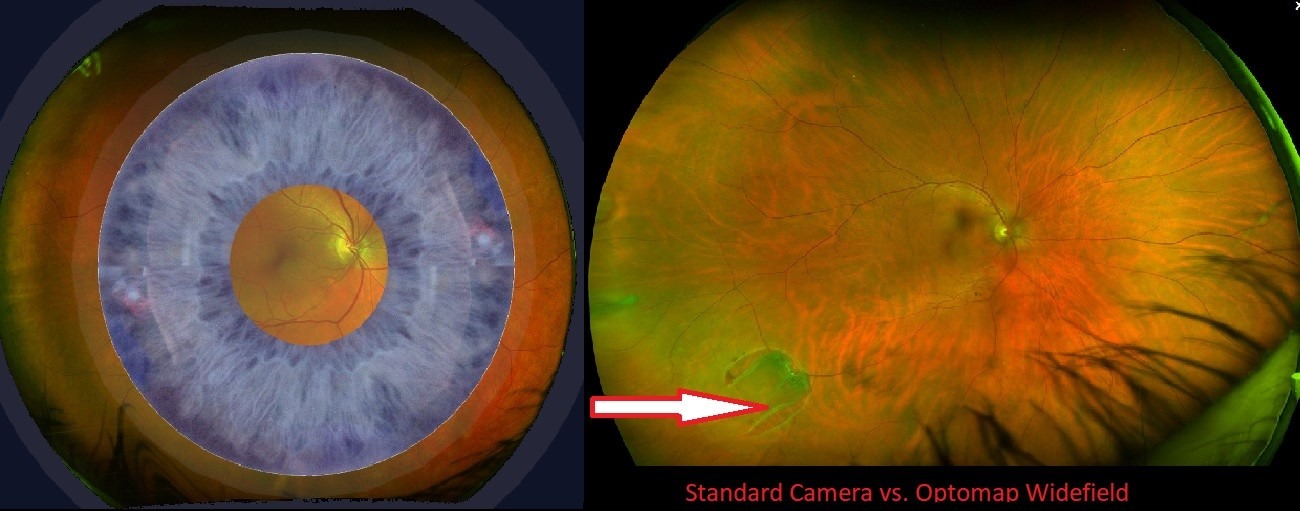
Optomap was specifically designed for patients who are difficult to examine — and that includes most young children. Kids often can’t hold their eyes wide open or sit perfectly still long enough for a traditional retinal exam. Optomap captures a wide-angle image of the back of the eye in seconds, even when a child is wiggling.
The result is a much more thorough look at the retina, optic nerve, and blood vessels — areas where serious conditions can hide and where standard exams sometimes fall short with kids. For a first eye exam, Optomap is one of the most valuable add-ons available.
Optomap also reduces (though does not always eliminate) the need for dilation drops. The optometrist will let you know in advance if drops are clinically necessary.
Why does axial length measurement matter for my child?
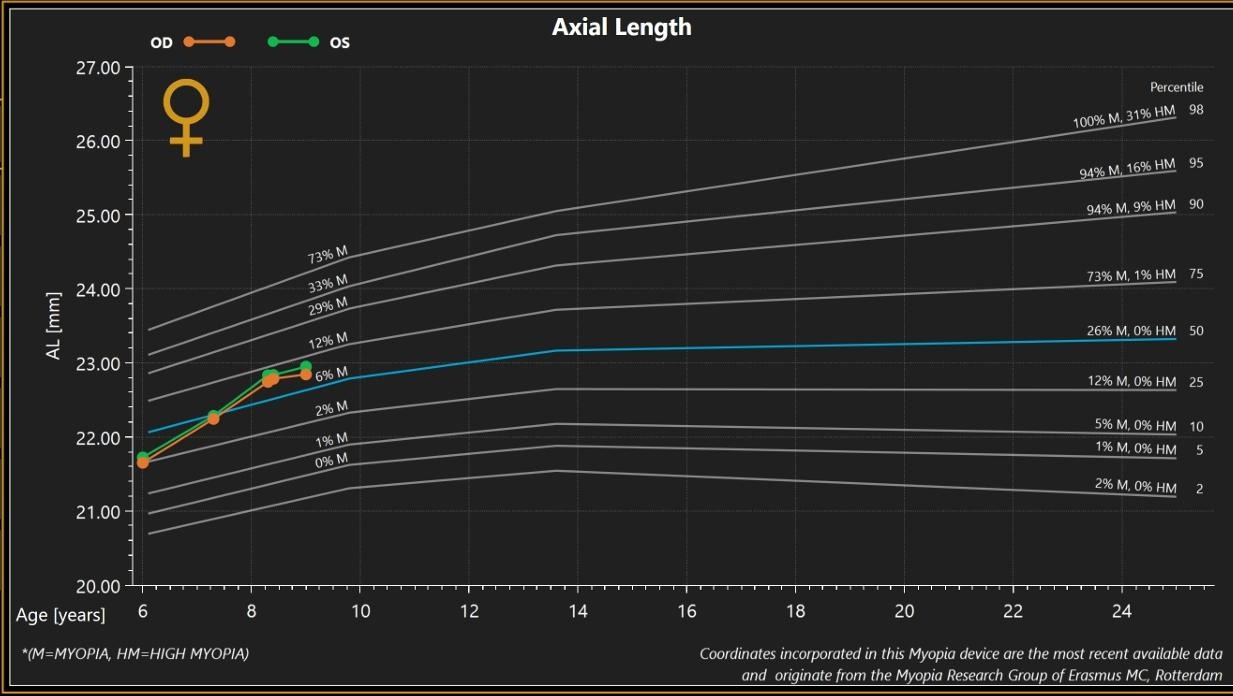
Axial length measurement is the gold standard for assessing myopia risk and tracking how fast nearsightedness is progressing. It tells the optometrist whether your child’s eye is growing faster than it should — which is the underlying cause of myopia.
This matters because myopia is rising fast in kids worldwide, and once it starts, it usually progresses every year through the teens. The earlier we identify a high-risk eye, the more effectively we can slow progression with myopia management — before the prescription gets worse.
If anyone in your family wears glasses, an axial length measurement is one of the most useful tests your child can have.
What happens at a child’s first eye exam?
A first pediatric eye exam at Waverley Eye Care Centre typically takes 30–45 minutes and includes a mix of fun, kid-friendly tests. Your child will not need to read letters off a chart if they are too young — the optometrist uses pictures and shape-matching games instead.
A thorough first exam covers:
- Eye alignment and tracking — making sure both eyes work together
- Focusing ability — how well the eyes shift between near and far
- Refractive error — checking for nearsightedness, farsightedness, or astigmatism
- Eye health — examining the front and back of the eye, ideally with Optomap
- Color vision and depth perception
- Developmental visual skills — critical for reading and learning
- Axial length measurement — when myopia risk is a concern
At the end, the optometrist sits down with you (the parent) and explains exactly what was found, whether your child needs glasses, and when they should come back. You leave knowing what’s going on with your child’s eyes — not guessing.
What’s the difference between a vision screening and a real eye exam?
A vision screening is a quick check that catches obvious problems. A full eye exam by an optometrist is a complete diagnostic assessment.
Screenings — whether at school, the pediatrician’s office, or anywhere else — typically only test how clearly your child sees a chart. They miss:
- Eye-teaming and focusing problems (a major cause of reading struggles)
- Farsightedness (kids can pass a chart test but still have trouble reading)
- Eye health issues like early signs of disease
- Developmental vision delays
- Risk factors for myopia progression
Even if your child passed a screening, they still need a full eye exam.
My child had an eye exam at school — is that enough?
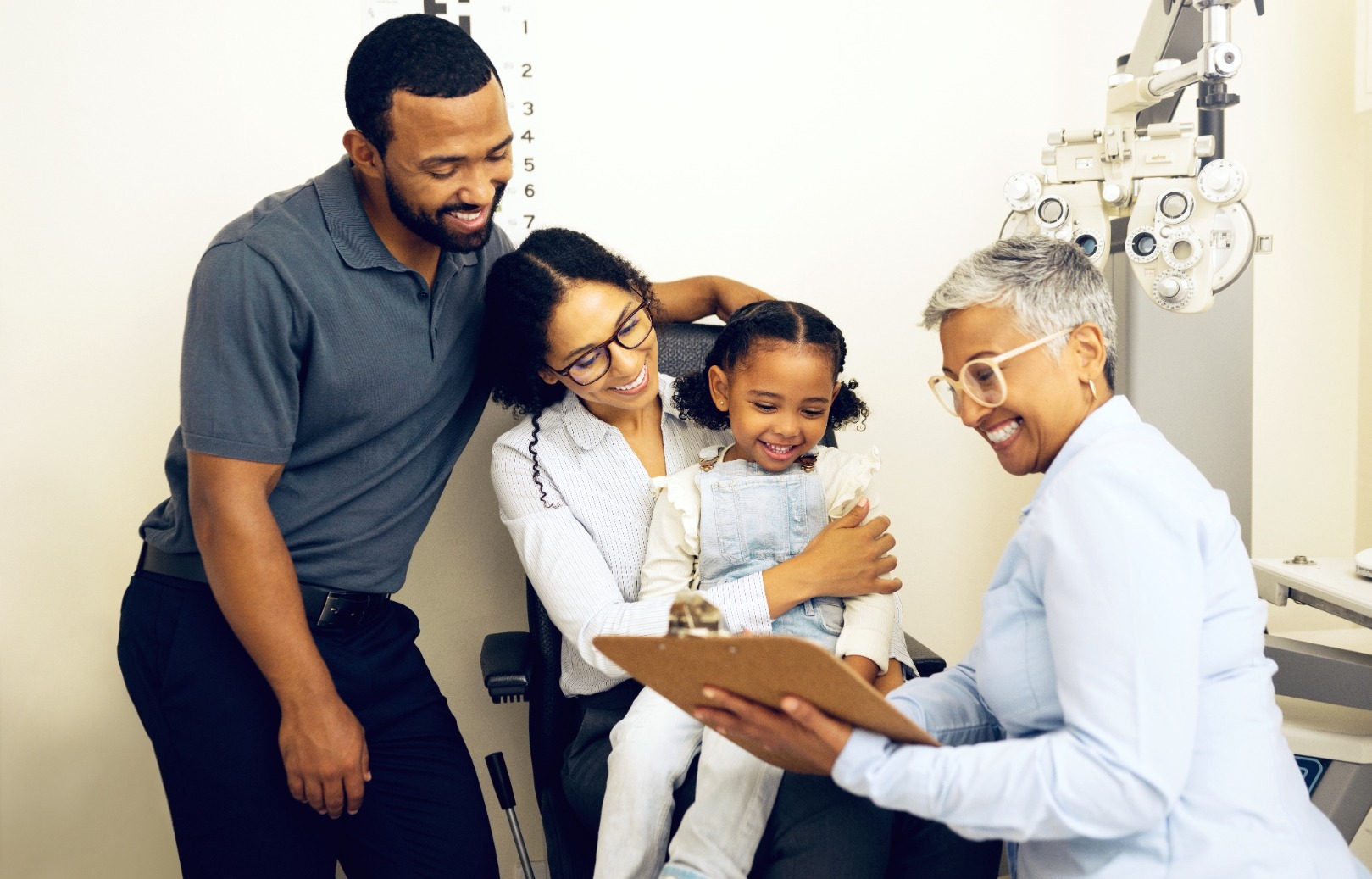
Not always. Some Manitoba schools host visiting eye exam programs, and while these can identify some issues, the format is very different from a comprehensive exam at a family eye clinic — and the differences matter.
Things to consider with any in-school eye exam:
- Time — in-school exams are typically much shorter than an in clinic exam
- Direct conversation with the optometrist — at a family clinic, the optometrist sits down with you, explains the findings, answers your questions, and tells you what to watch for. With many in-school programs, parents only receive a written note and never speak directly to the doctor.
- Advanced testing — Optomap and axial length measurement are not available in a school setting
- Continuity of care — your family optometrist tracks changes year over year. A one-time school visit doesn’t build that history.
If your child has had an in-school exam, that’s fine — but consider it a screening rather than a substitute for a comprehensive exam. You always have the right to bring your child to your own optometrist, and Manitoba Health will still cover the annual exam.
If you weren’t able to talk directly to the optometrist about your child’s eyes, you didn’t get the full picture.
How do I choose the right eye clinic in Winnipeg for my child?
Look for a family-focused independent clinic with pediatric experience, modern equipment, and unhurried appointments where the optometrist talks directly to you. Avoid any setup where you only receive a written report without a real conversation about your child’s eye health.
Specifically, look for:
- An optometrist who regularly sees kids (ask when you book)
- Optomap retinal imaging — designed for examining children thoroughly
- Axial length measurement — for assessing and monitoring myopia risk
- 30–45 minute pediatric appointments, not 10 or 15
- A waiting room where kids feel comfortable
- A direct, in-person discussion with the optometrist after the exam
- Continuity — the same optometrist for follow-ups year after year
Waverley Eye Care Centre checks every box on that list.
Should I take my child to a big-box optical store or a local optometrist?
For a first pediatric eye exam, a local family optometry clinic is almost always the better choice. Big-box stores prioritize glasses sales and quick exam slots. Independent clinics like Waverley Eye Care Centre prioritize the relationship and long-term eye health.
Here’s the practical difference:
- Local clinic: longer appointments, pediatric-trained optometrist, advanced imaging, direct conversation with the doctor, same optometrist every visit
- Big-box chain: shorter appointments, rotating optometrists, focus on selling frames
For a child’s first exam — when nerves and trust matter most — local wins.
What signs mean my child should see an optometrist sooner?
Book an exam right away if your child squints, tilts their head, sits very close to screens, complains of headaches, or has trouble with reading or schoolwork. These are the most common signs of an undetected vision problem.
Other red flags:
- One eye drifting in or out
- Frequent eye rubbing
- Avoiding close-up activities like coloring or puzzles
- A family history of myopia, lazy eye, or strabismus
- Premature birth or developmental concerns
If any of these apply, do not wait for a school screening or a routine check next year.
Why is myopia (nearsightedness) such a big deal for kids right now?
Childhood myopia is rising fast — and once it starts, it usually progresses every year through the teens. That is why modern pediatric clinics now offer myopia management: treatments that slow how fast a child’s nearsightedness gets worse.
Early detection matters. The younger a child develops myopia, the higher the long-term risk of eye health issues in adulthood. Waverley Eye Care Centre offers a full myopia management program, including specialty contact lenses, treatment drops, and axial length measurement to track progression accurately.
Axial length measurement is what makes modern myopia management possible — and it’s something a quick screening simply can’t provide.
How do I prepare my child for their first eye exam?
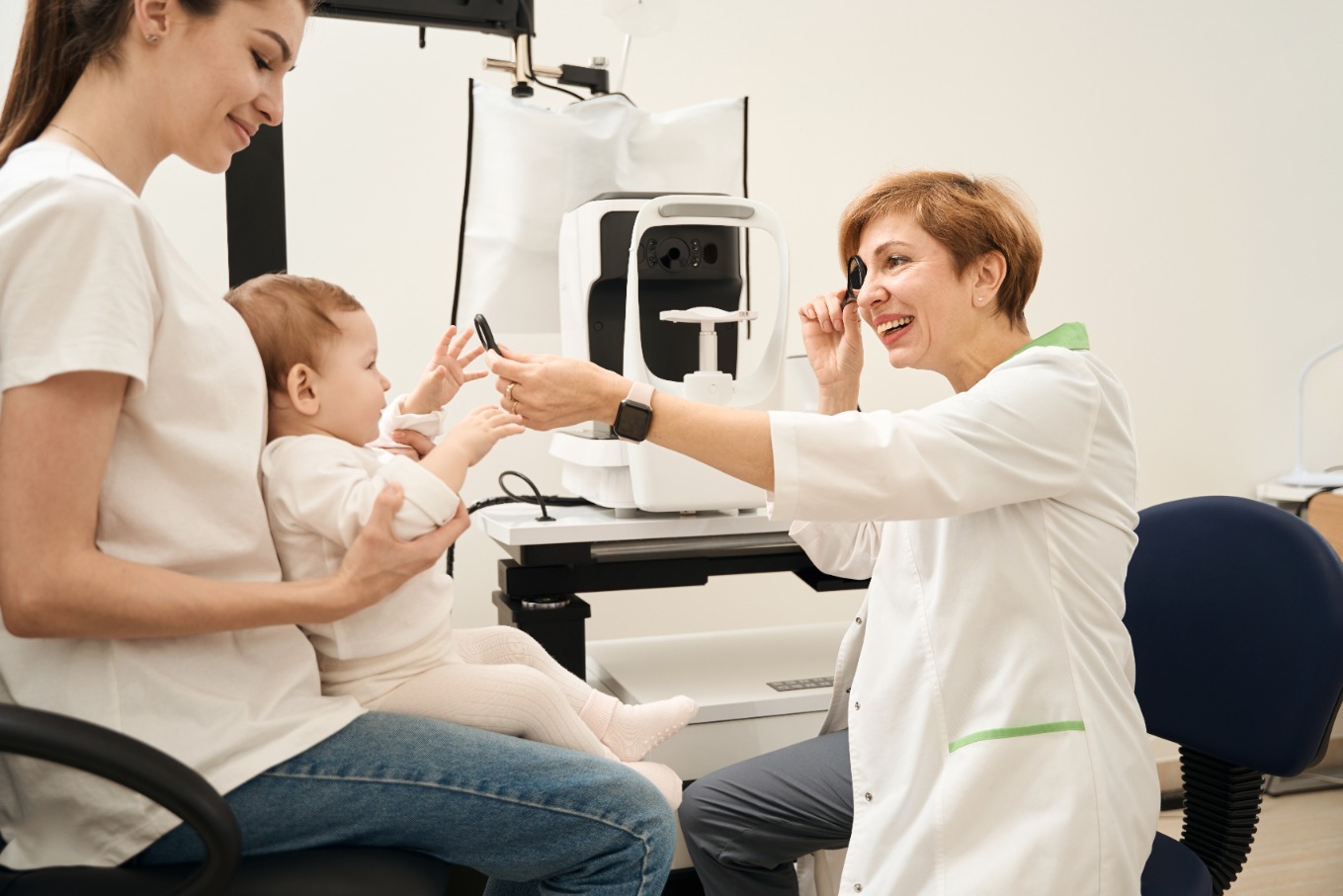
Keep it simple, positive, and short. Tell your child it is like a fun checkup with games, not a “test.” Avoid the word “shot” or “needle” — there are none.
A few practical tips:
- Book in the morning when kids are fresh
- Bring a favorite toy or book
- Pack a snack for after
- Eye drops are sometimes used, but the optometrist will tell you in advance if they’re needed
- If your child wears glasses already, bring them
Most kids leave a first exam saying it was easier than the dentist.
Frequently Asked Questions
Do I need a referral to see an optometrist in Winnipeg?
No. You can book directly with any optometry clinic in Manitoba.
Is the eye exam really free for my child?
The basic exam is fully covered by Manitoba Health for children under 19. Optional add-on tests like Optomap and axial length measurement carry a small fee and are not covered, but they significantly improve the quality of the assessment for kids.
Are eye drops always used during a child’s exam?
No, but they are sometimes clinically necessary. Optomap reduces the need for dilation drops in many cases, but not all. The optometrist will let you know in advance if drops are needed for your child.
My child had an exam at school — do they still need to see an optometrist?
Yes, in most cases. In-school exams are short and often don’t include direct communication between the optometrist and the parent. A comprehensive exam at a family clinic is a fuller assessment, and you’ll be able to ask questions in person.
At what age should my child be tested for a learning-related vision problem?
Before grade 1, and again any time a teacher or parent notices reading difficulty, frequent loss of place, or avoidance of schoolwork.
Will my child need glasses?
Most do not at their first exam. If they do, the optometrist will explain why, what kind, and how often they need to wear them.
How often should my child have eye exams after the first one?
Annually, even if vision seems fine. Manitoba Health covers it.
Can I bring siblings to the same appointment?
Yes — and it is actually a smart idea. Waverley Eye Care Centre can book back-to-back family appointments.
What should I bring to the first appointment?
Manitoba Health card, any current glasses, a list of concerns, and notes from the school if there was a screening or in-school exam.
My child is shy or nervous — will the optometrist be patient?
Yes. At a family-focused clinic, this is routine. Pediatric exams are paced for the child, not the clock.
Why families in Lindenwoods, Whyte Ridge, and Linden Ridge choose Waverley Eye Care Centre
Waverley Eye Care Centre serves families across Lindenwoods, Whyte Ridge, and Linden Ridge — making it one of the most convenient family eye clinics in southwest Winnipeg.
For local parents, the appeal is straightforward: short drive, easy parking, kid-friendly clinic, and the same optometrist for every visit — through preschool, school, and beyond. That continuity matters when you are tracking a child’s vision development over time, especially with axial length measurements that build a year-over-year picture of myopia risk.
The bottom line
For a child’s first eye exam in Winnipeg, choose a local family optometry clinic with pediatric experience, modern imaging like Optomap, axial length measurement, and an optometrist who talks directly to you about your child’s eyes.
Waverley Eye Care Centre is built for exactly this. The basic exam is covered by Manitoba Health, the appointment is unhurried, and you leave knowing what’s going on with your child’s vision.
Book before kindergarten if you can — and definitely before grade 1.
Waverley Eye Care Centre — Lindenwoods / Whyte Ridge / Linden Ridge — waverleyeyecare.com